Online European Roulette in the UK: Wheels and Bets
 Available in GB
See how the single-zero wheel, betting layout and payout rules shape European roulette, from online tables to live dealer games.

Table of Contents
- European Roulette’s Single-Zero Wheel and House Edge
- What to Check Before Choosing a UK Roulette Casino
- How to Place Roulette Bets and Read the Payouts
- Finding a European Roulette Wheel Online
- Single-Zero Tables, Inside Bets and the La Partage Rule
- Free Play, Real-Money Roulette and Bonus Terms
- How the European Roulette Table Layout Guides Your Bets
- Roulette-Branded Slots and Lightning-Style Games
- What to Expect from Live Dealer European Roulette
- European vs American Roulette: Pockets, Odds and Bet Risks
European Roulette’s Single-Zero Wheel and House Edge
European roulette is built around a wheel with 37 pockets: the numbers 1 to 36 and one green zero. When the ball comes to rest, the pocket it lands in determines the result of the spin. That single zero is central to understanding the game’s mathematics. It gives the wheel an outcome that is not part of the numbered sequence and affects the chances behind bets across the table.
The numbers appear on the wheel in an order that differs from their arrangement on the betting layout. The layout is where bets are placed; the wheel is where the ball lands. Keeping those two parts distinct helps make the game easier to follow. A bet relates to a possible result or group of results, while the spin produces just one winning pocket. The visual layout can make options look evenly organised, but the wheel’s pockets determine the underlying probabilities.
In a standard European roulette game, every pocket is a possible outcome of a spin. The wheel does not remember previous results, and a run of one colour or a particular group of numbers does not make another result due. Each spin is determined by chance. A sequence may look patterned after it has happened, but it cannot tell you what the next ball drop will produce.
When choosing an online European roulette option in the UK for 2026, you may want to consider how long withdrawals take. This list gives you the stated payout speed for each operator.
Payout speed: 1-3 business days SpinFormula lists a payout speed of 1–3 business days, giving you a stated timeframe to consider.
Payout speed: 1-3 business days NightLuck lists a payout speed of 1–3 business days, which may help you factor withdrawals into your choice.
Payout speed: 1-3 business days Revery Play lists a payout speed of 1–3 business days, a useful detail for you to consider when reviewing your options.
Payout speed: 1-3 business days BeOnBet lists a payout speed of 1–3 business days, providing you with a stated withdrawal timeframe.
Payout speed: 1-3 business days EvoSpin lists a payout speed of 1–3 business days, so you have a stated timeframe to consider for payouts.
Payout speed: 1-3 business days Britsino lists a payout speed of 1–3 business days, a practical detail for you to keep in mind.
Payout speed: 1-3 business days Dieselwin lists a payout speed of 1–3 business days, giving you a stated indication of payout timing.
Payout speed: 1-3 business days NightWin lists a payout speed of 1–3 business days, which you can take into account when considering the operator.
Payout speed: 1-3 business days x3bet lists a payout speed of 1–3 business days, giving you a stated timeframe for payouts.
Payout speed: 1-3 business days Zombillion lists a payout speed of 1–3 business days, a detail you can consider when choosing.
What the house edge means
The house edge for European roulette is 2.70%. This figure describes the casino’s theoretical advantage over time, based on the game’s rules and the relationship between possible outcomes and the way bets are settled. It is not a fee taken from each stake, nor does it predict the result of a particular spin.
That distinction matters when you are looking at an online European roulette game. The edge is a long-run measure, not a promise that the casino will keep a fixed share of every player’s money during a short session. A player can finish a session ahead or behind; chance produces variation from one run of spins to another. The house edge describes the underlying structure of the game across repeated play, not what will happen to an individual balance.
The single zero is what gives European roulette its defining wheel structure. The numbers 1 to 36 make up the numbered pockets, while zero is an additional result. Because a spin can land on zero, the numbered outcomes do not account for every possible result. That feature influences the probability of bets tied to numbers and groups of numbers, and it is built into the game’s mathematical edge.

The edge is not a measure of how likely a player is to win a particular bet in isolation. It is a way of describing the average effect of the game’s rules across play. A bet may cover more than one possible result, but the wheel still has the same set of 37 pockets. The chance of a result and the amount paid when it occurs work together to shape the casino’s long-term advantage.
Why one spin cannot show the edge
A single spin can produce an outcome that looks favourable or unfavourable to a player, but it cannot demonstrate the long-run edge on its own. The same is true of a short sequence. Random outcomes can cluster, and a player may see several results that seem connected. That does not alter the wheel or make a different result more likely next time.
This is also why systems based on reacting to previous spins cannot predict the ball’s destination. Increasing or changing a stake after a result does not change the pockets or the odds. A losing streak can put pressure on a bankroll, especially if you keep increasing stakes in an attempt to recover losses. No roulette strategy can identify the next winning pocket, because the outcome is determined by chance.
For anyone exploring European roulette online, the useful starting point is the game’s fixed structure: a single-zero wheel, 37 pockets, and a 2.70% house edge. Those facts describe the standard game, but they do not tell you how an individual session will go. Treat the edge as a mathematical feature rather than a forecast, and decide what you are comfortable staking before play begins.
Attention: No roulette strategy can identify the next winning pocket, as every spin is determined by chance.
What to Check Before Choosing a UK Roulette Casino
A casino’s suitability is about more than whether it offers European roulette. Before creating an account, check that the operator is authorised to serve the British market, explains its game information clearly and gives you practical ways to control your gambling. A polished site or familiar game name is not a substitute for those checks.
Confirm the operator’s UKGC licence
The UK Gambling Commission (UKGC) is the regulator responsible for online gambling in Great Britain. Operators selling gambling to customers there must hold the relevant UKGC licence, even if the company is based elsewhere. A platform without a valid UKGC licence cannot legally offer real-money live roulette to British residents.
Look up the operator on the UKGC’s public register and compare the registered business name and licence details with the information on the casino’s own site. Do this before depositing; a licence logo alone is not proof that the account belongs to the business named on the register. Offshore platforms sit outside the UKGC system, so they do not provide the same regulatory protections. The legal responsibility to hold a licence rests with the operator, but checking its status helps you avoid treating an unregulated service as a UK casino.

Check verification and account controls
A UKGC-licensed operator must verify your age before allowing you to deposit. You should not be able to fund an account first and leave age checks until later. You must be at least 18 to gamble legally with a UKGC-licensed operator. The site may also ask for identity or other details as part of its checks; read its explanations so you know what it needs and how to contact support if a verification issue arises.
New customers must be prompted to set a financial limit before their first deposit. The account should also have accessible controls for setting or changing limits. Check where those controls are before you pay in, rather than assuming they will be easy to find later. UKGC-licensed casinos must provide safer-gambling tools, including self-exclusion.
For live casino play, the operator must offer deposit and loss limits, session time reminders, reality checks and cool-off periods, as well as access to GamStop self-exclusion. These are practical controls, not a promise that gambling will remain harmless. If you want to take a break or stop, find the relevant tools and understand their effect before you start playing.
Look for clear game information
A suitable casino should make return-to-player (RTP) information accessible. Check the game’s help or rules panel and the operator’s game information pages; you should be able to find the stated RTP without having to rely on an advertising claim. If the information is difficult to locate or appears inconsistent, ask customer support to direct you to the relevant details before you deposit.
RTP is not a prediction of what you will receive during an individual session. It describes a game’s theoretical return over extended play, not a promised result for your next spin. Read it alongside the game rules, and make sure the information refers to the roulette game you intend to play rather than another product with a similar name.
Review the wider protections
UKGC licensees must provide an internal complaints process and access to an approved Alternative Dispute Resolution service if a complaint is not resolved through the operator. Check that the site explains how to raise a dispute and identifies the relevant route for escalation. Clear terms for account checks, withdrawals and complaints help you understand what to expect if a problem arises.
Payment options are another point to verify. UKGC-licensed casinos cannot accept credit cards for gambling, including credit-card funds routed through a money service business. They also cannot accept wallet payments where the wallet allows credit-card funds to be used for gambling. A payment method appearing on a page does not, by itself, establish that every way of funding it is permitted.

There is no single operator that can be called the best choice for every player. Instead, use the licence register, the casino’s accessible game and account information, and the availability of required protections to judge whether it is suitable for you. If any of those details are unclear, pause before depositing rather than relying on a general claim that the site is safe or trusted.
How to Place Roulette Bets and Read the Payouts
Before you place a roulette bet, decide what result you are backing and how much you are staking. The payout describes the amount won relative to the winning stake; it does not mean every bet has the same chance of landing. A higher payout comes with a narrower outcome to hit, while broader bets cover more possible results.
Inside bets: specific numbers and groups
Inside bets target individual numbers or small groups. A straight-up bet covers one number. If it wins, the payout is 35:1: for each unit staked, the casino pays 35 units in winnings, with the original stake also returned. The bet succeeds only if the ball finishes on the number you selected.
A split bet covers two adjacent numbers and pays 17:1. It gives you two possible winning results, but the ball must still land on one of those chosen numbers. A street bet covers a horizontal row of three numbers and pays 11:1. These bets are useful to recognise when you are comparing potential payouts, but the larger figure does not make a result more likely.
Check the table’s displayed payout information before confirming a bet, particularly if you are switching between game versions. The figures above are standard roulette payouts for the bet types described. They are not a promise of a return on every spin: a losing bet loses the amount you placed.
Outside bets: broader outcomes
Outside bets cover broader categories rather than selecting a single number or a small group. Red or black, even or odd, and high or low each pay 1:1. A winning bet returns winnings equal to the stake, as well as the original stake. For instance, if you stake one unit and win, the payout is one unit in winnings plus your stake back.
Outside Bet Payout
Example: 1:1 × 1 unit = 1 unit in winnings (plus the original stake returned).
These choices can be easier to follow because the selection is a category rather than an individual number. Still, 1:1 is a payout ratio, not a statement that you are guaranteed to win or that the result is predictable. Each spin is determined by chance.
Read the return before confirming
When you play European roulette online, select a bet, check the amount shown on the table, and read the payout attached to that bet before confirming it. Make sure you understand whether the displayed ratio refers to winnings only; in standard roulette notation, the original stake is returned alongside the quoted winnings when the bet wins.
A simple way to keep track is to consider two separate questions: what result must occur for the bet to win, and what does the payout return if it does? A straight-up bet has a much narrower target than red or black, while its quoted payout is higher. The payout alone cannot tell you which choice is right for your budget.
If you are learning how to play European roulette, take time to identify the bet type and its return before each spin rather than clicking quickly. Keep the stake within an amount you have already decided you can afford to lose. Once a bet is confirmed, the selected result and payout do not change the fact that the spin can lose.

Finding a European Roulette Wheel Online
A European roulette table can be easier to identify by its wheel description than by its name. Look for a single green zero and numbers running from 1 to 36: together, these make a European wheel with 37 pockets. A listing may simply say “European Roulette”, but the table information or game rules should confirm the format before you join.
Online casinos with European roulette may place games in a roulette category alongside other wheel formats. Use the game filters, where available, and check the title and rules screen rather than assuming every game labelled “roulette” uses the same wheel. If the description is brief, open the game before staking anything. The displayed wheel should show one zero, and the rules should identify the game as European roulette.
Choose a format that suits your pace
The main difference between online versions is how each spin is produced and presented. RNG roulette uses a random number generator to simulate spins. It moves quickly, without waiting for a physical wheel, and can offer lower minimum stakes; some games start at 10p. This can make it easier to try the interface and see how the game runs before deciding whether to continue.
Auto-roulette and speed roulette are other labels you may encounter. Auto-roulette uses an automated wheel, while speed roulette is designed to move through rounds quickly. Their pace can affect how much time you have to consider each decision, so check the countdown and table rules before placing a bet. A specialist review reports speed roulette at more than 150 spins per hour, compared with 80–100 at a standard table; these figures describe that source’s account, not a guarantee of the pace at every casino.
Uses a random number generator for fast spins and often lower minimum stakes starting at 10p.
Features an automated wheel to produce results.
Designed for a fast pace, potentially delivering more than 150 spins per hour.
Minimum stakes also vary by format and table. UK live roulette minimums can start at 10p, while auto-roulette and speed games sometimes start at 5p, according to a specialist review. Treat these as possible starting points, not fixed prices: the amount shown on the table itself is what matters. Check it before joining, especially if the game allows bets to be placed quickly from a phone screen.
Check the game before you join
On mobile, make sure the wheel, controls and stake information remain visible without obstructing one another. A game that loads successfully is not necessarily comfortable to use; you should be able to read the rules and see the current minimum before committing to a round. If you cannot find those details, leave the table and open another version.
A casino with European roulette may offer several presentations of the same basic game, including simulated and automated formats. Their speed and access can differ, but the title alone does not tell you how a particular round works. Read the information attached to the selected game, confirm the single-zero wheel, and choose a pace you can follow without rushing.
Single-Zero Tables, Inside Bets and the La Partage Rule
On a European single-zero table, the zero is not simply another number to include in an inside bet. It also affects the result of outside bets, and the table’s rules determine whether a zero costs you the whole stake or only part of it. Before placing chips, check whether La Partage applies; its presence changes the treatment of certain bets when the ball stops on zero.
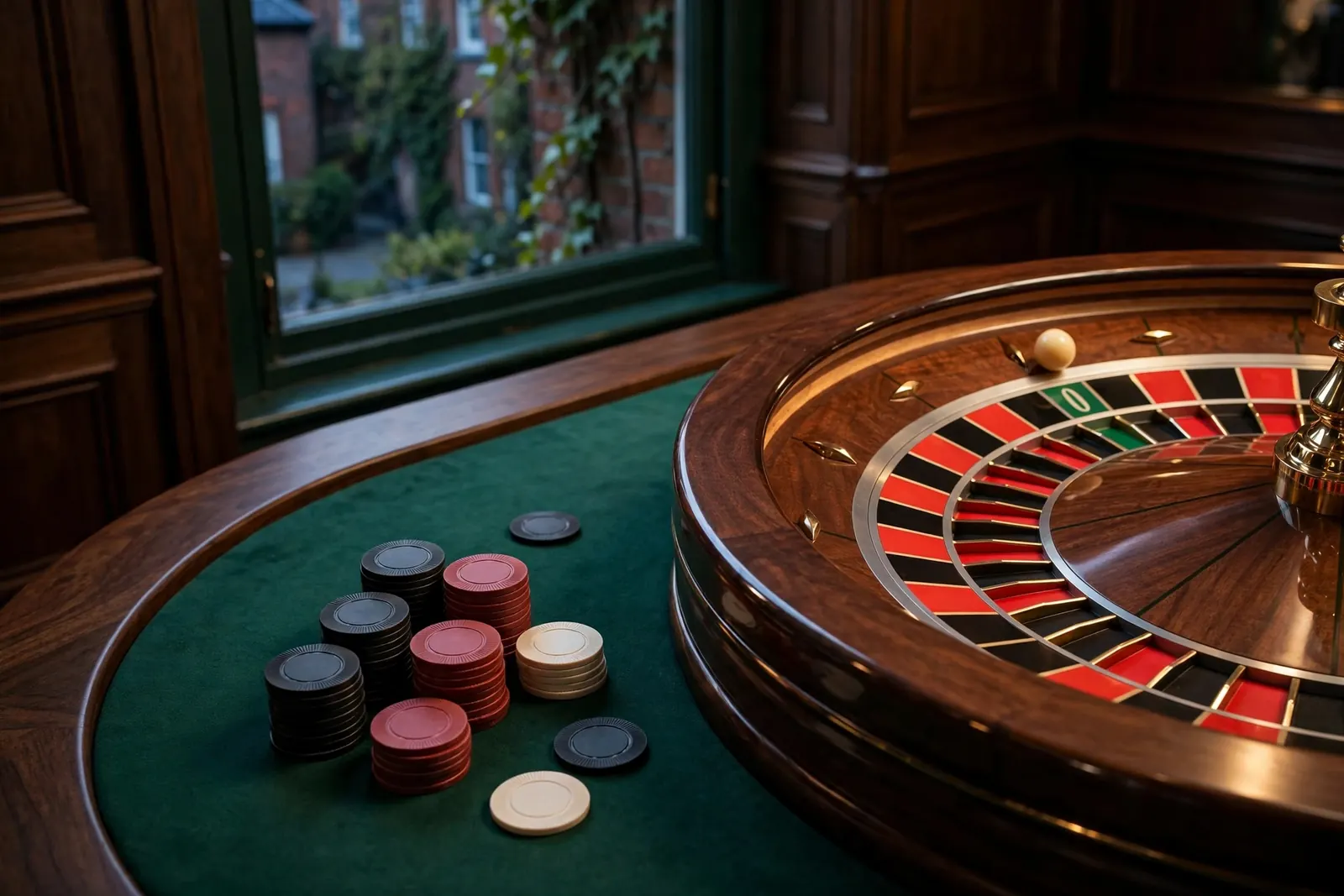
La Partage is relevant to even-money outside bets, such as red or black, odd or even, and high or low. These bets cover broad groups of numbers, but zero belongs to neither side of those choices. Under the rule, if the ball lands on zero, half of your stake on an even-money bet is returned and the other half is lost. The house edge on those bets falls to 1.35%.
That refund is not a win, and it does not apply to every bet on the table. If you have placed an inside bet on a particular number or group of numbers, La Partage does not turn a zero result into a partial refund on that wager. The distinction matters if you place inside and outside bets together: the zero can affect each stake differently, depending on the bet type and the table rules.
Check the rule before staking
A table labelled European roulette or single-zero does not, by that label alone, tell you whether La Partage is available. Look for the rule in the game information or table rules before you begin. If it is unclear, do not assume that a losing even-money bet will be partly returned. Without La Partage, a zero can make an even-money bet lose in full.
La Partage Rule
Under this rule, if the ball lands on zero during an even-money outside bet, half of the stake is returned and the other half is lost.
Also check exactly which bets qualify. The rule concerns even-money bets, not every wager that may seem to cover a broad range of outcomes. If you are combining different betting options, consider each one separately rather than treating the whole layout as though it receives the same protection.
La Partage changes the cost of the zero for eligible bets; it does not remove the risk or make a result predictable. A return of half the stake still leaves you with a loss on that spin. The ball’s landing place remains a matter of chance, so a run of previous results cannot tell you where it will stop next.
A single-zero table can therefore offer different practical conditions depending on its rules, even when the wheel itself is European roulette. Inside bets focus on selected numbers or small groups, while outside bets cover broader categories; La Partage matters specifically when an eligible even-money wager meets zero. If you prefer to know how zero is handled before choosing between those options, read the table rules first and keep your stake within an amount you can afford to lose.
Free Play, Real-Money Roulette and Bonus Terms
A free European roulette game lets you practise without staking money. The chips shown on screen are virtual, so a win in a demo does not create a cash balance you can withdraw. It can help you learn how a particular game works, but it cannot show what it feels like to risk your own funds or how you will respond to a losing run.

Real-money European roulette is different: each chip represents a stake from your account, and winnings or losses affect its balance. Before switching from a demo to cash play, make sure the table is the version you intend to use and that you understand the stake settings. Treat practice as a way to become familiar with the interface, not as evidence that you can predict a result.
Bonus funds add another set of conditions. A casino may require you to wager a stated amount before bonus funds, or winnings connected with them, can be withdrawn. Roulette may count towards that requirement at a different rate from other games. The rate is called game weighting, and it determines how much of each eligible wager contributes to the requirement.
A specialist review describes roulette weighting as operator-dependent: live roulette may count at 10% or 20%, while RNG roulette can count at 100%. It also reports that most UK operators count roulette wagers at 10% to 20%. These figures are not a promise about the offer in front of you; the applicable terms for your account and game are what matter. A game that looks like a straightforward way to clear a requirement may contribute less than you expect, or may be excluded altogether.
Bonus Wagering
Check the game weighting for roulette, as live versions may contribute significantly less toward wagering requirements than RNG versions.
Since January 2026, a specialist review reports that UK regulations cap bonus wagering at a maximum of 10x for licensed operators. A cap does not mean every bonus has that requirement, nor does it remove other conditions. Check how the multiplier is calculated, which roulette games qualify, whether live and RNG versions receive different game weighting, and what happens when the promotion ends. Read the terms before accepting bonus funds or relying on them to make a game affordable.
If the rules are unclear, pause before opting in and ask the operator to explain them. Keep your own stake separate from bonus funds in your decision-making: a promotion does not change the roulette outcome or make a wager safer. For real-money play, decide what you can afford to lose before starting, and do not increase your stake to meet a bonus condition.
How the European Roulette Table Layout Guides Your Bets
On a digital European roulette table, the betting area is usually shown beside or beneath an image of the wheel. The felt is not just decoration: each marked space corresponds to a particular bet. Once you know how the areas are arranged, you can check where a chip will land before confirming it.
The central number grid contains the numbered pockets, from 1 to 36, with a separate space for zero. This is where you place a chip if you want to select an individual number or a small group of neighbouring numbers. The boundaries between spaces matter: a chip placed on a line may represent a bet covering more than one number, while a chip centred inside a number’s box selects that number alone. If the interface offers a magnified view, use it rather than guessing at a touch-screen position.
Around the grid are the outside-bet areas. These marked zones let you select broader groups without tapping each number individually. Look for labels for red or black, odd or even, and high or low numbers. The dozen and column areas sit alongside the number grid, aligned with the groups they cover. Their placement can vary slightly between games, so read the label on the table rather than relying only on its position.
A European table has 37 pockets in total: the numbers 1 to 36 and a single zero. The zero is commonly shown in green and set apart from the numbered grid. That separation makes it easier to spot, but it does not make the space irrelevant; check that your chip is on the intended area before the betting period closes.
Online controls can make the same layout feel different. A mouse lets you position a chip with a pointer, while a phone or tablet relies on taps. Some games also provide controls for repeating a previous set of bets or clearing the layout. These can save effort, but they may also reproduce a selection you no longer intend to make. Review the displayed chips after using them.
A simple way to orient yourself is to locate the number grid first, then identify the labelled areas around it. Treat each click or tap as a deliberate selection, not as a shortcut to a result. No arrangement of chips on the felt can predict where the ball will land; an “european roulette strategy” based on the screen’s layout can help you place bets accurately, but it cannot change the outcome.
- Use a magnified view for precise chip placement
- Read table labels to identify dozen and column areas
- Review displayed chips after using repeat or clear controls
- Guess your touch-screen position on the number grid
- Rely on the general position of areas instead of labels
- Use layout-based strategies to predict the ball’s landing
Roulette-Branded Slots and Lightning-Style Games
A game with a roulette wheel in its title or artwork is not necessarily roulette. Some online slots borrow the wheel, numbered pockets or casino-room imagery, but they use slot-game rules rather than a ball landing on a numbered pocket. The reel symbols and the game’s own paytable determine whether a spin wins; roulette bets and their standard odds do not apply.
That distinction matters when you see labels such as “3D European roulette”, “European Roulette Gold” or “European Roulette Platinum”. A title or visual style alone does not tell you how the game works. Check the game information and paytable to establish whether you are looking at a slot or a roulette table. For a slot, look for its stated return information and rules; for roulette, check the wheel variant and the rules attached to the bets. The word “European” in a product name does not by itself confirm that the game uses a standard European wheel.
Lightning Roulette is different again: it is a roulette-style game with altered payout rules, not simply a slot decorated with a wheel. Its special feature can affect the return on a straight-up number bet, so do not assume that every winning number pays at the standard rate. A specialist review reports that a straight-up bet without a lightning multiplier pays 29:1 rather than the standard 35:1. Treat that detail as something to verify against the specific game’s current rules, since game terms can change.
The distinction does not apply to every bet in the same way. The same specialist review reports that Lightning Roulette’s outside bets retain standard roulette odds. Read the paytable before staking, rather than relying on the game’s name or on how similar the interface looks to a conventional table.
When checking “European roulette odds”, first identify the product. A slot’s return information describes its own game, not the chance of a particular roulette number landing. A roulette table’s rules determine how its bets are settled. Those are different things, even when the screen combines familiar roulette imagery with additional features.
If a game page is unclear, pause before placing a bet and open its rules or help panel. Confirm whether it is a slot or a roulette variant, and check any changed payouts or special conditions there. Familiar visuals are not a substitute for knowing which rules govern the wager.
What to Expect from Live Dealer European Roulette
A live European roulette table uses a physical wheel filmed in a studio. You watch a human dealer set the ball in motion and follow its path until it settles in a pocket. The result comes from that real ball drop, rather than a computer-generated spin. The video stream lets you see the round unfold, while on-screen controls show when betting is open and when the dealer has closed the betting window.
Live Dealer Experience
Live European roulette uses a physical wheel filmed in a studio with a human dealer. This format follows the pace of a real table, requiring the dealer to set the ball in motion and announce the result before the next round begins.
That format feels different from RNG roulette, where software generates each result and the next spin can begin without waiting for a wheel to be reset. Live play has the pace of a real table: the dealer conducts the round, announces the result and prepares for another. If you prefer to follow each stage rather than move quickly between simulated spins, that may suit you. It also means you should check the table’s displayed stake limits before joining. A specialist review has reported live tables with minimum stakes beginning at 10p, while some auto-roulette and speed roulette formats have appeared with entry points of 5p; these are reported examples, not a promise about every table.
For British players, the stream is only one part of what matters. A platform without a valid UK Gambling Commission licence cannot legally offer real-money live roulette to residents of Great Britain. At a UKGC-licensed operator, you must be able to use deposit and loss limits, session time reminders, reality checks and cool-off periods. GamStop self-exclusion must also be available. These controls apply to live-casino play, not just to a particular roulette format.
Set limits before you begin, and make sure you understand how to change or use them in your account. Session reminders and reality checks can help you notice how long you have been playing; a cool-off period provides a break, while GamStop is a self-exclusion option for blocking access to participating gambling sites. They are practical safeguards, not a way to influence the wheel’s outcome.
If the dealer’s pace or the stream makes it easy to lose track of time, use the available reminders and stop when your chosen limits are reached. A live table can make the process more visible than an RNG game, but it does not make outcomes predictable or remove the need to keep play within your own boundaries.
European vs American Roulette: Pockets, Odds and Bet Risks
The main difference between European and American roulette is the number of pockets on the wheel. European roulette has numbers 1 to 36 and one zero, giving it 37 pockets. The American layout adds a double zero, so it has 38. That extra pocket changes the chance of a winning bet without changing its stated payout.
On a standard European wheel, the house edge is 2.70%. On the standard American wheel, it rises to 5.26%. This is why the same kind of wager carries a greater built-in disadvantage on the American version: the winning number has to come from a larger set of pockets, while the payout remains the same.
The American basket bet is riskier still. It covers the zero, double zero, and the first two numbered pockets; its house edge is 7.89%. If you see this bet on the layout, its broad coverage should not be mistaken for a favourable chance of winning. The payout does not offset the extra risk created by the pockets it covers.
Some American roulette tables shown by UK online casinos may include a third green pocket marked 000. A specialist review reports this version with a 7.69% house edge. Treat that as a possible table variation, not a description of American roulette everywhere: check the rules displayed for the specific game before placing a bet.
For a direct comparison, look at both the wheel’s pockets and the rules for any special bets. A game labelled “American” may have a different layout from the standard 38-pocket wheel if it includes 000, while European roulette retains its single-zero arrangement. The displayed house edge helps put the difference into perspective, but it does not predict an individual spin. Each result remains a matter of chance, and no betting system can remove the underlying disadvantage. If you prefer the lower standard house edge, the single-zero European game has the smaller one; that still does not make any spin predictable or guarantee a return.
Should I play American or European roulette if I’m in the UK?
European roulette has the lower house edge: 2.70%, compared with 5.26% for standard American roulette. American roulette can have an even higher edge on some tables, especially on the basket bet.
How does roulette actually work?
You place a bet on a possible result or group of results, then a ball lands in one pocket on the wheel. In European roulette the wheel has 37 pockets, while American roulette has 38; each spin is determined by chance, and previous results do not predict the next one.
How does the 10x wagering cap affect roulette bonuses?
Since January 2026, wagering requirements for bonuses at UK-licensed operators are capped at 10 times the bonus. Roulette may contribute only part of the required wagering: live roulette commonly counts at 10% to 20%, while RNG roulette often counts at 100%.
What is the house edge on European roulette compared to American roulette?
European roulette has a 2.70% house edge, compared with 5.26% on standard American roulette. The American roulette basket bet has a 7.89% edge, and some tables with a third green pocket marked 000 have a 7.69% edge.
Prepared by the Candyland Casino 2 editorial staff.