
USA Casinos for UK Players: What to Check
 Available in GB
A US-style name does not show whether an operator is licensed to serve Britain or what protections apply.

Table of Contents
- What “USA casino” means for a player in the UK
- What changes when you play outside UKGC oversight
- Why some overseas sites still let UK visitors through
- Deposits, identity checks and the limits of a low minimum
- How to assess an American-branded casino without relying on its label
- Before you deposit: check the terms and your own limits
- Free spins and welcome offers: calculate the wagering first
- How long overseas casino withdrawals can take
- What a useful review should verify
- Real-money play, winnings and self-exclusion
What “USA casino” means for a player in the UK
“USA casino” is a label, not a regulatory status. It might describe a brand’s name, its intended audience or the way its games and promotions are presented. By itself, it does not tell you where the operator is licensed, whether that licence covers customers in Britain, or whether the operator is allowed to offer gambling here.
That matters if you are looking at American online casinos from the UK. A site may look and sound US-based without holding a US licence; it may be licensed somewhere outside both the US and the UK. Even a genuine licence from another country does not replace the permission required to serve the British market. The relevant question is not whether a casino calls itself American, but whether its operator holds a Gambling Commission licence for offering gambling to customers in Great Britain.
In this context, a foreign casino is an online gambling operator that accepts British customers but does not hold a UK Gambling Commission licence. Such operators are licensed offshore and are not regulated by the Commission. The word “foreign” describes the operator’s position relative to the UK licensing system; it does not establish that a site is based in the United States. “USA-friendly” is similarly inconclusive: it may suggest that a site welcomes visitors from particular places, but it is not evidence of permission to serve customers in Britain.
If you’re exploring USA casino options from the UK in 2026, payout timing is one practical detail to consider. Use this list as a starting point and check the terms that apply to you before signing up.
Payout speed: 1-3 business days SpinFormula lists payouts at 1–3 business days, giving you a stated timeframe to consider.
Payout speed: 1-3 business days NightLuck lists a payout speed of 1–3 business days, which gives you a clear timing detail to weigh.
Payout speed: 1-3 business days Revery Play states that payouts take 1–3 business days, so you have a published timeframe to refer to.
Payout speed: 1-3 business days BeOnBet gives a payout timeframe of 1–3 business days for you to take into account.
Payout speed: 1-3 business days EvoSpin lists payouts at 1–3 business days, a useful timing detail when you’re reviewing the operator.
Payout speed: 1-3 business days Britsino states a payout speed of 1–3 business days, giving you one specific detail about its service.
Payout speed: 1-3 business days Dieselwin lists a 1–3 business day payout timeframe for you to consider.
Payout speed: 1-3 business days NightWin gives a stated payout speed of 1–3 business days, which can help inform your review.
Payout speed: 1-3 business days x3bet lists payouts at 1–3 business days, providing you with a published timing estimate.
Payout speed: 1-3 business days Zombillion states that payouts take 1–3 business days, giving you a timeframe to keep in mind.
The operator’s conduct and the player’s position
The legal distinction is between what an operator does in the British market and what an individual player does. In England, Scotland and Wales, an online gambling operator must hold a Gambling Commission licence to offer gambling services to customers there. Advertising those services in the UK without the required licence is also unlawful. A casino’s overseas licence does not authorise it to offer or advertise gambling to British customers.
That restriction is directed at the operator. It does not mean that a British player commits a crime simply by placing a bet with a casino licensed outside the UK. There is no UK law prohibiting an individual from betting with an overseas operator. So the statement “this site is not licensed by the UK Gambling Commission” and the statement “a player is breaking the law by using it” are not interchangeable. The first concerns the operator’s permission to serve the market; the second incorrectly transfers that legal responsibility to the customer.
This distinction can be easy to miss when a site is described as one of the best USA casinos for UK players. That wording may be a description or a recommendation, but it cannot establish that the operator has permission to serve customers in Britain. Nor does the presence of a licence from another jurisdiction change the UK licensing requirement. A foreign licence and a UK Gambling Commission licence are different things, and one should not be treated as a substitute for the other.

Read the label as a clue, not proof
When you encounter a US online casino presented as available to British players, separate the claims being made. “American” may refer to branding or intended audience. “Licensed” needs to be read alongside the name of the regulator and the operator covered by that licence. “Available to UK players” describes access or acceptance, not necessarily lawful permission to offer gambling services in Britain.
The same care applies to phrases such as “USA-friendly online casino” or “new USA casino”. They do not, on their own, answer where the operator is licensed or whether it can lawfully serve the UK market. A site’s willingness to accept a customer is not proof that it holds the licence required to offer gambling here. Likewise, a page that uses “USA casino” in its title is not evidence that the casino is based in the United States or regulated there.
This is why the label should not be used as a shortcut for deciding what kind of operator you are dealing with. An American-sounding name does not establish a US licence. A foreign licence does not establish UK permission. And a site described as suitable for people in Britain may still be an offshore operator outside the UK Gambling Commission’s system.
Legal Distinction
A British player does not commit a crime by betting with an overseas operator, but the operator itself must hold a Gambling Commission licence to lawfully offer services in Great Britain.
For customers in England, Scotland and Wales, the essential distinction is straightforward: operators offering gambling to people in Britain need the relevant UK Gambling Commission licence, while the player is not made criminally liable merely by placing a bet with an overseas casino. Keeping those two points separate helps you interpret claims about USA casinos without mistaking a marketing label for a licence or an operator’s conduct for the player’s legal position.
What changes when you play outside UKGC oversight
A site can look polished and still sit outside the system that regulates gambling in Britain. If you use an overseas casino, the key difference is not its branding or the country suggested by its name: it is that the operator is not regulated by the UK Gambling Commission (UKGC). That changes which standards apply and what you can rely on if something goes wrong.
UKGC oversight is the framework for operators serving customers in Great Britain. An offshore casino does not fall under that regulator’s supervision, so you cannot assume that British rules, complaint routes or enforcement powers apply to it. Even if the operator holds a licence elsewhere, that is not the same as holding a UKGC licence. A licence from another jurisdiction does not give you UKGC protection.
This distinction matters when you are weighing claims that a site is “safe” or “legitimate”. Those words can refer to different things: a site may be operating under a licence in another jurisdiction, but that does not mean it meets the requirements for serving the British market or that the UKGC can intervene on your behalf. A specialist review may describe an offshore licence as evidence of regulation; treat that as a separate claim from UK oversight, not as a substitute for it.
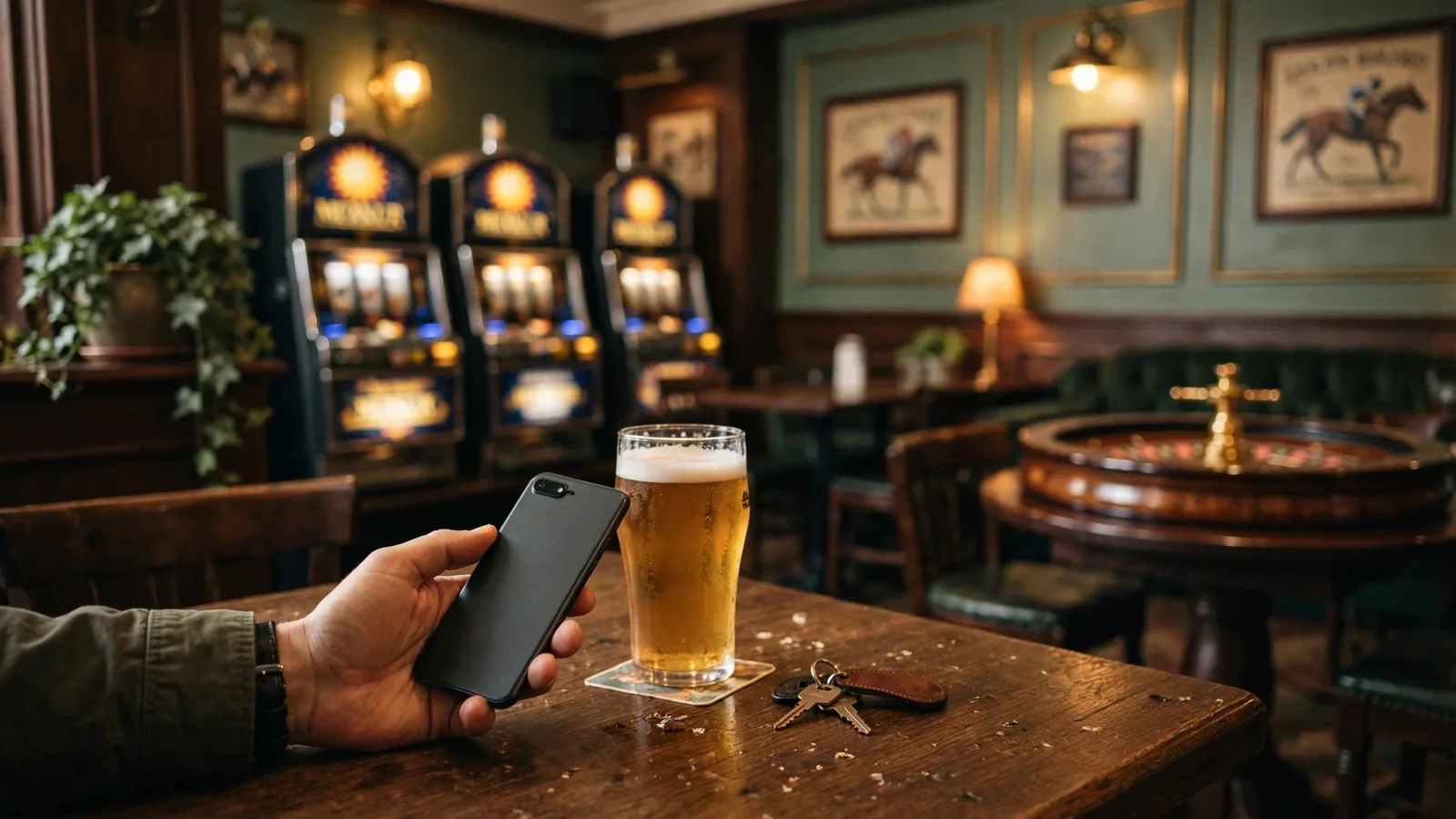
The practical limit is clearest when a dispute concerns money. Gambling.com has reported cases in which unlicensed operators refused to pay customers’ winnings, leaving those customers without effective legal recourse. That is not a claim that every offshore casino will withhold a payout. It is a warning about the weaker position you may face if the operator decides not to resolve a dispute: a British regulator cannot use its powers against a business it does not regulate.
A dispute can be difficult to pursue even when you believe the terms are on your side. You may have to deal with a company based overseas, under rules and procedures set by another jurisdiction. The UKGC cannot act as though the operator were one of its licence holders, and you should not assume that a complaint to a British authority will compel an offshore business to pay. If the operator does not cooperate, the distance between you and the company can make practical remedies harder to obtain.
That is why the protection question is broader than whether a site says it has a licence. The relevant issue is what that licence allows, which regulator is responsible, and whether that regulator’s processes are available to you. An overseas regulator may have its own rules, but its existence does not turn the operator into a UKGC-licensed casino. Nor does a professional-looking website establish that a regulator will resolve a dispute in your favour.
You should also not expect UKGC-mandated affordability checks at an offshore casino. Those checks are part of the British regulatory framework; an operator outside it is not subject to the same UK requirements. This does not mean the site will never ask questions or apply its own controls. It means that you cannot rely on the safeguards required of UKGC-licensed operators being present in the same form. If you are concerned about your spending, do not treat the absence of a check as evidence that the level of play is manageable.
No UKGC Protection
If you use an offshore casino, the UK Gambling Commission cannot intervene on your behalf or use its powers to resolve disputes, such as withheld winnings.
The same caution applies to general promises about player protection. An offshore operator may describe its own safeguards, and a review may praise them, but those statements do not give the UKGC authority over the business. If you need help challenging a decision, your options depend on the operator’s arrangements and the jurisdiction in which it is licensed. You may not have the familiar British route available to you, and the outcome may be less certain.
This does not mean that every overseas operator behaves badly. It means that the protection you can count on is different. A dispute over a withheld win, a closed account or an unclear decision can become a matter between you and a company beyond the UKGC’s reach. Before relying on any assurance, keep the central point in view: an offshore licence is not UKGC regulation, and it does not provide the same route to redress as a British licence.
Why some overseas sites still let UK visitors through
A casino website loading in Britain does not prove that its operator is authorised to serve people here. A visitor may see a homepage, create an account or reach a games lobby because the site’s access controls have not stopped them. Those are technical outcomes, not evidence of permission to offer gambling in the UK.
Some casinos licensed outside the UK are intended to block British visitors. A report by gambling.com says that some such sites do not enforce the block, and that users may get around it with a basic VPN. This is a report about access controls, not a guarantee that any particular website will accept a visitor, allow registration or keep the same settings over time.

A VPN can make a connection appear to come from somewhere other than the user’s actual location. If a casino relies on location checks that are not consistently applied, that change may be enough to get past a barrier on the website. But getting past a technical barrier does not change the operator’s licence, its obligations in Britain or the legal status of the service it is offering.
That distinction matters when you are trying to find American-branded gambling sites that appear open to UK visitors. A site may use US imagery, refer to American games or display a page that can be viewed from Britain without being a US-licensed casino, or one authorised to serve British customers. The name on the homepage and the fact that it loads are not reliable tests of either point.
For the British market, remote operators offering gambling to customers in England, Scotland and Wales must hold the relevant UK Gambling Commission licence. An operator without that licence cannot lawfully provide gambling facilities to UK customers or advertise its services here. A page being reachable, or an account form accepting details, does not make that operation lawful.
It is also worth separating what the operator does from what you do as a visitor. A British player is not made legally responsible simply because a foreign site can be reached. The legal issue described here concerns an unlicensed operator offering gambling services in Britain, not a player using a website. That does not turn access into approval, or make a site’s claims about UK availability dependable.
Attention: The ability to reach a website or create an account does not prove the operator is authorised to serve the UK market or holds a required licence.
This is why searches for US casinos accepting UK players can produce confusing results. A result may describe a site as open to British users because its pages are accessible, because a reviewer managed to register, or because the site does not appear to apply a location block consistently. None of those observations establishes that the operator is permitted to serve the UK market. Nor does one visitor’s experience tell you what another person will encounter: access checks can vary by site, connection and time.
A VPN can also make the practical picture less clear. A site may treat a connection as coming from a different country, while other checks or later account activity may reveal that the customer is in Britain. Do not read a successful visit as evidence that the operator has assessed your location and accepted you under a UK licence. A connection tool can affect what the website sees; it cannot grant the operator a licence or alter the rules that apply to its UK-facing services.
The same caution applies to lists of American or USA casino sites said to accept British players. “Accepting” can mean no more than that a page opened or that someone reported getting through an initial barrier. It does not necessarily mean the operator has confirmed that it may provide gambling to people in Britain. An “available” label on a review page should therefore not be treated as a legal status check.
If you encounter a site while browsing, keep the questions distinct: can you technically reach it, does it actually permit registration from your location, and is its operator authorised to offer gambling to customers in Britain? A positive answer to the first—or even the second—does not answer the third. The location of the operator, its branding and the presence or absence of a visible block cannot substitute for the UK Gambling Commission’s licensing requirement.
So, do USA casinos accept UK players? Some sites may appear accessible, and a weak or unenforced location barrier may not stop every visitor. That is a statement about what the website allows technically, not a finding that the operator is entitled to serve British customers. Treat those as separate questions whenever a site’s wording makes access sound like authorisation.
Deposits, identity checks and the limits of a low minimum
A small advertised minimum can make a casino seem easy to try, but it tells you little about what happens after you register. The amount may not be available for your account, location or chosen payment method, and a low entry point does not establish that a site is trustworthy or that a later withdrawal will be straightforward. Treat any figure in an advertisement as a claim to verify, not as a confirmed option.
Before entering payment details, read the deposit page and the account instructions together. Check which methods the operator says it accepts, whether the method is available to you, and whether the name on the payment account must match your casino account. Payment choices can include options such as cryptocurrency, but that does not mean every casino offers them or that a particular method will suit you. Do not send money using a method that the operator has not clearly identified for deposits.
- Verify that the payment method is clearly identified by the operator
- Use official account processes for submitting identification
- Keep copies of all submitted documents and payment records
- Send sensitive information through unofficial channels
- Assume a low minimum deposit proves a site is trustworthy
- Treat an identity check as a substitute for UKGC affordability checks
Registration and verification are separate practical steps. You may be asked to provide identification so the operator can confirm your details; follow the instructions for submitting documents, and avoid sending sensitive information through an unofficial channel. Operators must check a customer’s age before allowing a deposit. Do not assume that being able to create an account means the checks are complete or that a deposit will be accepted.
A low minimum is not the same as a no-deposit offer. If you are comparing claims about welcome bonuses, free spins or sweepstakes-style play, keep those separate from the question of what you must pay in to open or use an account. Promotional wording can make an offer sound simple while leaving important conditions elsewhere. The deposit amount alone cannot tell you whether an offer is available to a UK customer or what restrictions apply.
Be especially careful not to read the presence of an identity check as proof of UK-level protection. Offshore casinos are not regulated by the UK Gambling Commission, and they do not provide the UKGC-mandated affordability checks. Those checks are part of the protections applied by UK-licensed operators; an overseas site’s request for identification does not replace them. Nor does a smooth deposit screen show what support or recourse you would have if an account or payment problem arose.
If an operator asks for more information, pause and confirm that the request comes through its official account process. Keep copies of what you submit and records of any payment confirmation. If the payment method, verification request or intended amount is unclear, do not proceed until you understand it. You are not obliged to complete a deposit simply because you have reached the payment screen.
The useful question is not whether a casino advertises a particularly low starting amount. It is whether you can identify the payment route, understand what information you are being asked to provide, and recognise the limits of the safeguards in place. A small deposit can reduce the money committed at the outset, but it cannot make an offshore operator subject to UKGC checks or turn an uncertain payment arrangement into a reliable one.
How to assess an American-branded casino without relying on its label
An American-sounding name, flag or theme can create an impression of a connection to the United States. It does not, by itself, show where the casino is licensed, which company runs it, or whether it is permitted to serve customers in Britain. The same applies to a review describing a site as American: the description is not a substitute for checking the operator behind the brand.
If you are considering an American-style casino site, separate its presentation from its legal and commercial identity. Look for the name of the operating company and the regulator named in its licence information. Then consider what that licence actually authorises. A Curaçao licence, for instance, is not permission to operate in the UK or the US. Santeda’s Curaçao licence does not allow it to operate in either country. A site’s claims should therefore be assessed against the named operator and its stated licence, not inferred from its branding.
For customers in Britain, the key point is whether the operator holds the relevant UK Gambling Commission licence. Offshore casinos are not regulated by the Commission. A casino cannot establish UK permission simply by using American imagery, accepting British visitors or appearing in a review that calls it a US casino. Those details describe presentation or access, not regulatory status.
Regulatory Status
An American-sounding brand or theme is a marketing label and not evidence of a US licence or permission to serve the UK market.
Ownership and commercial relationships can also matter when weighing claims about a brand. The Santeda–SIS arrangement is a useful illustration: under their contract, SIS received a percentage of revenue from losing bets placed through Santeda’s brands. That does not, on its own, tell you everything about the relationship or the operation of any individual casino. It does show why a brand name may not reveal all the parties with a commercial interest in the business.
When a review makes confident claims about a casino’s origin or safeguards, check whether it identifies the operator and explains the basis for those claims. A polished description, an American theme or a reference to an overseas licence does not demonstrate that the site has equivalent protections to a UKGC-licensed operator. Nor does a promise of easy registration or minimal checks establish the identity of the company responsible for the account.
Treat labels such as “American casino” as a starting point for scrutiny, not as evidence. What matters is the entity operating the site, the scope of its licence and whether it is authorised to serve customers in the UK. If those details are unclear or do not match the site’s claims, the branding cannot fill the gap.
Before you deposit: check the terms and your own limits
A small minimum deposit can make an offer feel low-risk, but it only describes the amount needed to start. It says nothing about how difficult it may be to withdraw funds, what restrictions apply, or whether the operator is permitted to serve people in Britain. Before paying in, treat the deposit amount as one detail to check, not a reason to trust an American-branded casino.
Start with the operator’s identity and regulatory position. A foreign licence does not replace a UK Gambling Commission licence: offshore casinos are outside UKGC regulation, and operators offering gambling to customers in Great Britain need the relevant UK licence. Do not assume that a USA label, a polished site or a claim of regulation establishes permission to serve UK customers. Offshore operators also do not provide UKGC-mandated affordability checks.
Then read the terms attached to the offer, not just its headline. Check whether a bonus is optional or automatically applied, which games count towards any wagering condition, whether there are restrictions on how funds can be used, and what conditions must be met before cashing out. Look for the rules in the operator’s own terms and make sure you can understand them before committing money. If a condition is unclear, do not rely on an advert or a review to fill in the gap.
A specialist review has illustrated the effect of a 35x requirement on a £20 bonus: it would mean £700 in qualifying bets before cash-out. That calculation is specific to the stated example, not a general rule for every offer. Your own terms may define qualifying play differently, so check the wording and work out the total requirement before accepting anything.
Set a personal spending limit before depositing, and decide in advance what you can afford to lose. Do not treat a low minimum as a sensible budget, or deposit more to chase a bonus or recover losses. If the terms, operator details or your own limit give you pause, stop before entering payment information. A careful decision can be to leave the offer alone.
Free spins and welcome offers: calculate the wagering first
A free-spins offer can sound simple, but the headline rarely tells you what you can withdraw. The spins may be restricted to selected games, winnings may be capped, and any prize may have its own wagering condition. Check whether the offer gives you cash or bonus funds, how long you have to use it, and what happens to unused spins or winnings when the offer expires.
A specialist review identifies deposit matches, free-spins packages, no-deposit bonuses and cashback as common formats at foreign casinos serving UK players. A deposit match adds bonus funds when you deposit; a no-deposit offer does not require an initial deposit to claim it, though conditions can still apply. Cashback may return part of eligible losses as bonus funds rather than withdrawable cash. Each format can come with separate restrictions, so the label alone does not explain its value.
The key figure is the wagering requirement: the amount you must stake on qualifying games before bonus funds, or winnings linked to them, can be withdrawn. A specialist review illustrates the arithmetic with a 100% match bonus of £100 carrying a 35x requirement. That means £3,500 in qualifying bets must be placed before the bonus funds convert to withdrawable cash. It does not mean you will recover that amount, or that the wagering will produce a balance to withdraw.
Check what the multiplier applies to. A requirement based on the bonus alone produces a different total from one based on the deposit and bonus together. Also look for exclusions: some games may contribute less, or not count at all, and a maximum cash-out condition can limit what remains payable after wagering.
A specialist review also observes that foreign casinos may advertise larger welcome packages because they are not bound by UK Gambling Commission restrictions on bonus terms, wagering requirements and promotional language. That is not proof that an offer is generous or easy to claim. Compare the full conditions, not the advertised total, and treat “free” as a description of the promotion—not a promise of cash you can withdraw.
How long overseas casino withdrawals can take
“Instant” and “same-day” are claims to check against the withdrawal terms, not reliable promises of when money will reach you. A casino may distinguish between the time it takes to approve a request and the time a payment provider or bank takes to deliver it. Pending periods, operator processing, withdrawal limits and identity checks can all affect the total.
For e-wallets, a specialist review reports that many foreign casinos process Skrill and Neteller withdrawals within 24 hours, with some doing so in less than 12 hours. That describes processing, not a guaranteed arrival time. Check whether the terms count weekends or begin the clock only after a pending period or account check.
Bank transfers are described in a specialist review as the slowest option, often taking five to seven business days; some operators add their own processing time before the bank transfer begins. If you need the money by a particular date, that distinction matters: a stated banking timeline may not include the operator’s queue.
Processing for services like Skrill and Neteller often occurs within 24 hours, sometimes in less than 12 hours.
The slowest option, typically taking five to seven business days, plus any operator processing time.
Withdrawals can clear in less than an hour, though value can fluctuate during conversion.
A specialist review also reports that crypto withdrawals at foreign casinos can clear in less than an hour. Crypto is not a dependable way to preserve a particular amount, however, because its value can move between withdrawal and conversion. Speed alone does not tell you what the funds will be worth when you receive or exchange them.
Treat any advertised instant withdrawal as conditional until you have read the payment rules for the specific operator. Look for the stated processing window, pending period, maximum withdrawal, verification requirements and any limits on the method you used to deposit. These conditions vary between operators, so one casino’s timing should not be taken as a guide to another’s.
Remember that overseas casinos are not regulated by the UK Gambling Commission and do not provide UKGC-mandated affordability checks. A quick payout claim does not change that. If the terms are unclear about when processing starts or what may delay payment, you cannot confidently estimate when the money will arrive.
What a useful review should verify
A review should distinguish an American-sounding brand from the operator’s actual licence and its permission to serve customers in Britain. Look for the named legal entity and the regulator responsible for it, then check whether the operator holds a UK Gambling Commission licence. An overseas licence is not a substitute: for example, Santeda’s Curaçao licence does not authorise it to operate in the UK or the US.
The review should also explain how its claims were checked. A licence badge or a statement that a casino is “trusted” is not enough on its own. You should be able to see which company runs the site and whether the review has verified the relevant details rather than repeating promotional copy.
Terms deserve specific attention. A useful assessment points you to the rules that affect your account, including bonus conditions, withdrawal requirements and circumstances in which a payment may be delayed or refused. It should describe payment methods and any stated conditions without implying that a method is available to every customer.

Finally, consider who benefits if you sign up through the review. Commercial relationships can shape what is emphasised or left unsaid. The Santeda–SIS arrangement is a reminder that these links can extend beyond ordinary advertising: under their contract, SIS received a share of revenue from losing bets placed through Santeda’s brands. That does not by itself settle whether a review is reliable, but it makes disclosure and careful scrutiny important.
Treat a review as a starting point, not proof. Compare its claims with the operator’s own terms and licensing information, and be wary when it gives confident assurances without showing what supports them.
Real-money play, winnings and self-exclusion
For a player in Britain, placing a bet with a casino licensed overseas is not itself a crime. The legal responsibility is different for the operator: a site offering gambling to customers in England, Scotland or Wales must hold a UK Gambling Commission licence. An overseas licence does not replace that requirement.
That distinction does not make an offshore casino equivalent to a UK-licensed one. It is outside UKGC regulation, and UKGC-mandated affordability checks do not apply. If you choose to play for money, be clear about those limits before you deposit; the fact that a site accepts your registration does not provide the safeguards attached to a UK licence.
Tax is a separate issue. Gambling winnings are not subject to UK income tax, whether they come from a UKGC-licensed operator or a casino licensed abroad.
Self-exclusion needs particular care. GamStop covers UKGC-licensed operators, so registering with the scheme blocks access to those sites. Casinos operating outside the UKGC’s remit are not part of GamStop. A person who has excluded themselves can therefore still encounter and register with a foreign casino, without the same exclusion barrier or protections. A specialist review has reported that registration can be quick; regardless of timing, access is not evidence that the operator is safe or authorised to serve Britain.
If you have self-excluded because gambling is becoming difficult to control, using a site beyond GamStop can undo the practical barrier you put in place. Consider keeping that barrier intact and seeking support rather than treating access to another casino as a harmless workaround.
Can I play at a casino licensed outside the UK?
Yes, you are not committing a crime simply by betting with an overseas casino. However, an overseas licence does not authorise the operator to offer gambling to customers in Great Britain.
What should players check to assess whether an international casino is safe?
Check which regulator licences the operator and whether the licence covers that operator; a foreign licence is not a UK Gambling Commission licence. Also look for security measures such as encryption, and remember that an offshore casino is outside UKGC oversight.
What happens if I have a dispute with a foreign casino?
You cannot rely on the UK Gambling Commission to supervise or intervene with an offshore operator. Some unlicensed sites have refused to pay winnings, leaving customers with little or no legal recourse.
Are gambling winnings subject to income tax in the United Kingdom?
No. Gambling winnings are not subject to UK income tax, whether they come from a UKGC-licensed or foreign casino.
Is it legal for UK residents to use casino sites that operate outside the UK’s licensing framework?
Yes, there is no UK law prohibiting you from placing bets with an overseas operator. It is the operator—not the player—that acts unlawfully by offering gambling to customers in Great Britain without a UKGC licence.
How long do withdrawals take at the listed operators?
Times vary by payment method and operator: e-wallet withdrawals often clear within 24 hours, bank transfers commonly take five to seven business days, and crypto withdrawals can clear in under an hour. Operator processing delays, limits and verification procedures can affect the total time.
Are winnings from foreign casinos taxable in the UK?
No. UK gambling winnings are not subject to income tax, including winnings from foreign casinos.
Prepared by the Candyland Casino 2 editorial staff.